




Automation Materials
Automation is a general term for technologies that enable machines, systems, and processes to operate autonomously, minimizing human intervention. In modern industry, automation is used across a wide range of sectors, from manufacturing and energy to the food industry and logistics.
Today, businesses need to prioritize efficiency, speed, quality, and safety to remain competitive. Automation products step in precisely at this point, reducing production costs and minimizing human error.
Contributions of Automation to Industry
Increased Efficiency – More production with less manpower.
Cost Savings – Significant reduction in energy and labor costs.
Quality Standards – Ensures consistent product quality.
Safety – Minimizes workplace accidents by reducing the human factor in risky environments.
Flexibility – Allows for rapid changes and adaptations in production processes.
What are Automation Products?
Automation products vary according to the needs of different sectors. Below, let's examine the most commonly used automation products by categorizing them:
1. Programmable Logic Controllers (PLCs)
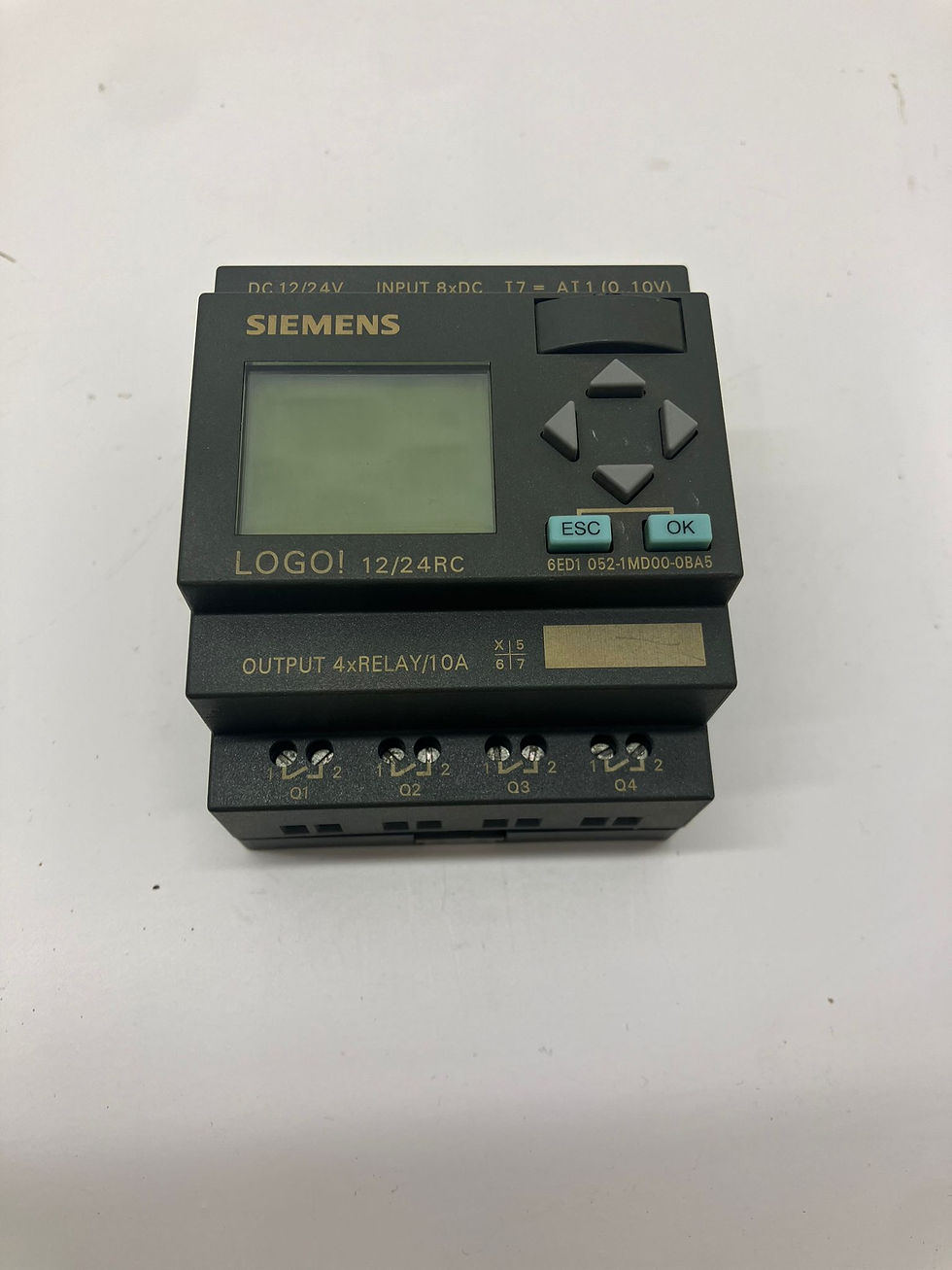
PLCs are the heart of industrial automation. They take over the complete control of machines and systems. Brands such as Siemens, Omron, Schneider, and Eaton offer PLC solutions in different scales.
Advantages: High speed, reliability, long lifespan.
Applications: Production lines, packaging machines, energy management, elevator systems.
2. Industrial Sensors
Sensors enable systems to perceive their environment. For example, a machine can measure parameters such as temperature, pressure, distance, or speed thanks to sensors.
Types: Photoelectric sensor, inductive sensor, capacitive sensor, temperature sensor.
Applications: Automotive, food, packaging, textile, energy.
3. HMI (Human Machine Interface) Panels
These are interface devices that allow operators to easily control machines. They are user-friendly with their touchscreen structure.
Advantages: Easy to use, data monitoring, remote access.
Brands: Siemens, Omron, Lenze.
4. Frequency Converters (Inverters)
Provides speed and torque control for electric motors. This results in energy savings and extended motor life.
Advantages: Energy efficiency, precise control, quiet operation.
Applications: Pump systems, conveyors, fans, compressors.
5. Industrial Relays and Contactors
These are fundamental control elements used to open and close electrical circuits. Enda, Schneider, and Eaton are prominent brands in this field.
6. Power Supplies and Energy Management Products
Reliable power supplies are necessary for the uninterrupted operation of automation systems. Furthermore, energy-efficient products make a significant contribution to businesses.
Prominent Brands and Products
Siemens
One of the world's leading automation brands. Offers industrial solutions with PLCs, HMIs, motor drives, sensors, and SCADA systems.
Omron
A reliable representative of Japanese technology. Known for its sensors, robot systems, and control devices.
Schneider Electric
A global giant in energy management and industrial automation solutions. Particularly distinguished by its sustainability-focused products.
Enda
One of Turkey's domestic production brands. Holds a significant place in automation with its industrial relays, time relays, and measuring devices.
Lenze
A German-based brand. Particularly known for its motor drives, gearboxes, and motion control systems.
Eaton
Known for its energy and power management solutions. Widely used with contactors, relays, automatic circuit breakers, and industrial power products.
Application Areas of Automation Products
Automotive Industry – Robotic production lines, welding machines, test systems.
Food and Beverage – Filling machines, packaging, quality control systems.
Textile – Weaving machines, dyeing plants, quality control.
Energy – Power plants, energy monitoring systems.
Logistics – Conveyor lines, warehouse automation, robotic arms.
Building Automation – Elevators, air conditioning systems, security systems.
Why Should You Use Automation Products?
Saves Time: Eliminates manual processes.
Ensures Energy Efficiency: Lower electricity bills.
Improves Production Quality: Minimizes human error.
Provides Competitive Advantage: Faster, more reliable, and more economical production.
The Future of Automation
With the developing Industry 4.0 technologies, automation is no longer just about controlling machines; it means intelligent systems integrated with artificial intelligence, the Internet of Things (IoT), and big data.
In the future, businesses will be able to manage not only production but also maintenance processes, energy consumption, and logistics operations with automation products.
Conclusion
Automation products are indispensable parts of today's industry. Products offered by global giants such as Siemens, Omron, Schneider, Enda, Lenze, and Eaton enable businesses to work more efficiently, safely, and sustainably.